
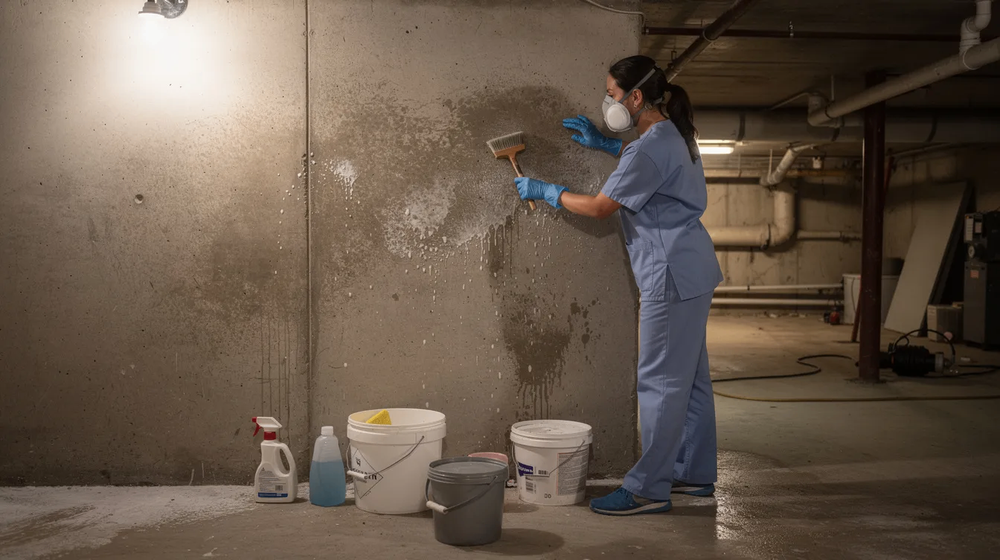
Discovering a white substance spreading across your basement walls or stored belongings is unsettling. White mold in basement environments is one of the most common issues Utah homeowners face, especially after snowmelt season or unexpected plumbing failures. Unlike the harmless dust that settles on forgotten boxes, white mold is a living fungus that feeds on organic materials and releases microscopic spores into your home’s air.
Basements—particularly unfinished ones with concrete walls and floors—create the ideal environment for mold growth. The combination of cooler temperatures, limited air circulation, and moisture intrusion from foundation cracks or condensation makes these spaces prime territory for fungal colonization. White mold thrives in environments with high humidity and excess moisture, making areas like bathrooms, basements, and kitchens prime locations for growth.
Left unchecked, white mold can damage stored belongings, compromise structural materials like wood framing and drywall, and cause health problems similar to some black mold species. This guide walks you through how to identify white mold versus harmless efflorescence, assess real health risks, and implement practical cleanup and moisture control steps that actually work. For homeowners dealing with persistent basement moisture, Superior Foundation Repair serves as a trusted local resource for addressing the underlying causes.
What White Mold in a Basement Looks Like (and How It Differs from Efflorescence)
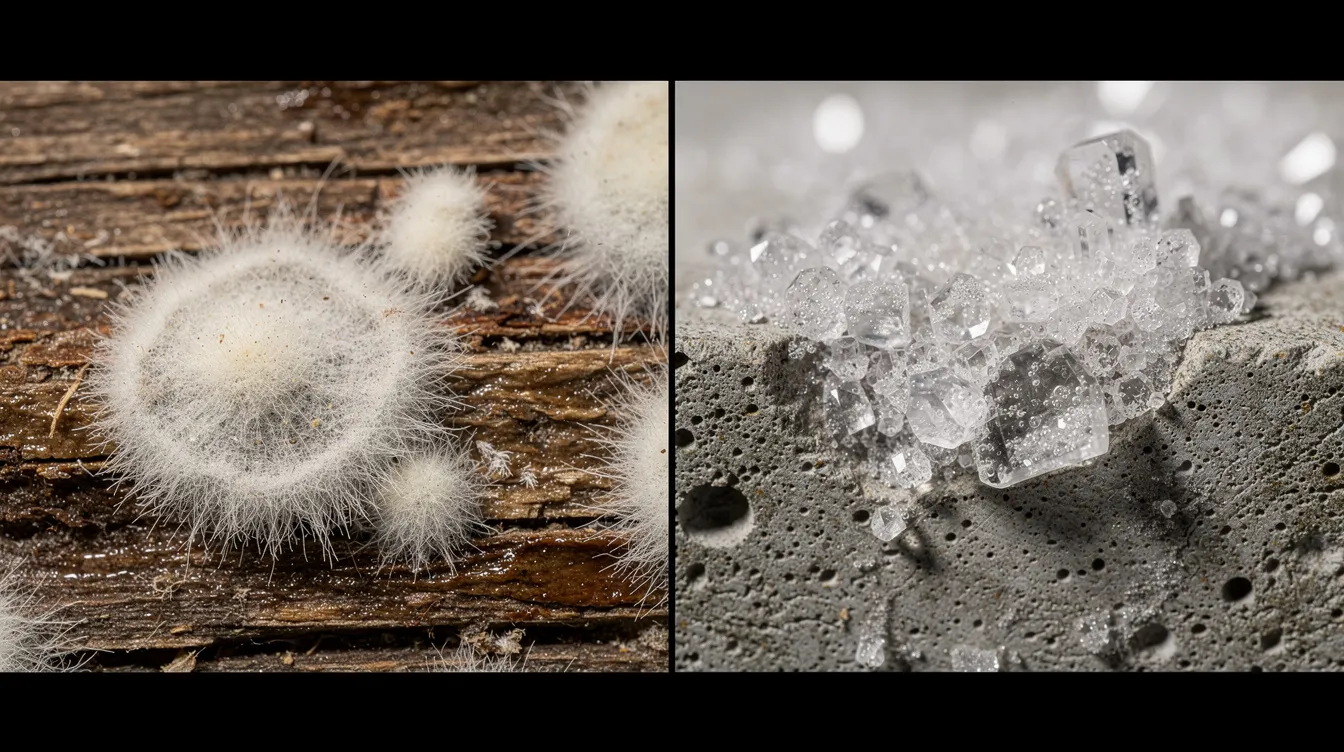
Many Utah homeowners confuse white mold with efflorescence—and the distinction matters. One is a living organism that poses health risks; the other is a harmless mineral deposit. When first developing, white mold is very hard to detect since the spores are tiny and can only be seen under a microscope; once colonies form, they appear as spots that can be flaky, powdery, stringy, or filmy.
Typical white mold appearance:
-
Fuzzy, cotton-like, or powdery patches ranging from bright white to grayish or cream
-
Commonly found on wood joists, cardboard boxes, drywall paper facing, and furniture white mold colonies
-
Produces a distinct musty smell from volatile organic compounds
-
Feels soft and may smear when gently scraped
-
White mold can appear as fuzzy, powdery, or cottony patches on surfaces
Typical efflorescence appearance:
-
Flat, chalky, crystalline film on concrete walls or basement floors
-
Salt deposits that form when water seeps through foundation and evaporates
-
Gritty texture that sparkles slightly under light
-
No odor whatsoever
White mold is often confused with efflorescence, which is a crystalline salt deposit that forms when water evaporates from concrete or brick; efflorescence is generally harmless and does not pose health risks, unlike white mold.
Quick at-home test: The Water Test for identifying white mold involves spraying a small amount of water; efflorescence dissolves while mold does not. Mist the white substance with distilled water—efflorescence will fizz and dissolve within 10-30 seconds. Mold persists, may darken, or spreads when disturbed.
Important: mold can appear white at first and later develop white mold growth with green or black streaks within 3-14 days. Early “harmless-looking” white patches should never be ignored.
Why Basements Are a Hotspot for Mold Growth
Mold growing in basements follows a predictable pattern driven by three factors: moisture, organic material, and stagnant air. White mold in basements is primarily caused by excess moisture and high humidity meeting organic food sources. Understanding these triggers helps you address the root cause rather than just cleaning surface symptoms.
Moisture sources specific to basements:
-
Groundwater seepage through foundation cracks (moisture intrusion can result from water seeping through foundation cracks, leaky pipes, or failed drainage systems)
-
Condensation on cool concrete walls (condensation occurs when warm, humid air hits cool basement walls or uninsulated cold-water pipes, creating damp spots)
-
Leaky water heaters losing 10-20 gallons annually undetected
-
Poorly directed downspouts channeling runoff toward foundations
-
Roof leaks traveling down interior walls
Utah’s freeze-thaw cycles—over 100 annually in Salt Lake City—stress foundations significantly. The region’s clay-heavy soils swell and shrink 10-20%, creating hairline cracks (0.1-1mm) that allow capillary wicking of groundwater. This sets up a moist environment ideal for mold colonization.
Organic “food” for mold includes:
-
Wood framing and joists
-
Paper-faced drywall (starch becomes exposed when wet)
-
Cardboard storage boxes (70% cellulose)
-
Stored fabric furniture and clothing
-
Other organic materials like carpet backing
White mold feeds on dust, wood, drywall, and cardboard stored in the basement. Organic materials like cardboard boxes, paper, or untreated wood stored in a damp basement can serve as food sources for mold.
Crawl spaces adjoining basements often share humid air through the stack effect, spreading mold problems between areas. Crawl spaces are prone to white mold due to their dark, damp conditions, often resulting from leaks, high humidity, and poor ventilation. Poor ventilation traps moisture, allowing spores to settle and colonize. White mold thrives in dark, damp, and stagnant environments.
Even “dry” basements can reach 60%+ relative humidity during summer months. Relative humidity above 60% provides enough moisture for mold to grow on surface materials. White mold can start to appear within 24 to 48 hours in conditions where moisture is present, highlighting the rapid growth potential of this fungus. White mold commonly grows in basements due to high humidity and poor ventilation, often appearing on concrete walls and wooden structures.
The key factors contributing to white mold growth include poor air circulation, persistent moisture problems, and the presence of organic materials as food sources.
Health Risks of White Mold in Basement vs Black Mold
Color alone doesn’t determine toxicity. The common assumption that white mold dangerous levels are somehow lower than black mold is misleading—multiple mold species can trigger significant health concerns regardless of appearance. While white mold is often perceived as less dangerous than black mold, it can still pose significant health risks and should be addressed promptly to prevent exposure.
White mold releases microscopic spores that can trigger allergy-like symptoms. Common health risks include:
-
Nasal congestion and runny nose
-
Coughing and wheezing
-
Eye irritation and watering
-
Skin rash and skin irritation
-
Respiratory issues in sensitive individuals
Exposure to white mold can lead to respiratory issues, allergic reactions, and other health problems, particularly in sensitive individuals such as young children and the elderly. Higher-risk groups include children, elderly residents, and people with asthma, COPD, or compromised immune system conditions living above moldy basements. Those with weak immune systems face elevated infection risks from certain mold species.
Long-term exposure to white mold can cause mold-induced asthma, allergic fungal sinusitis, and hypersensitivity pneumonitis. CDC data indicates 21% of U.S. adults report mold-related symptoms annually.
White mold vs black mold comparison: | Factor | White Mold | Black Mold (Stachybotrys) | |——–|————|—————————| | Growth speed | 24-48 hours | Requires sustained saturation | | Humidity needs | 50-60% RH | 60%+ RH for weeks | | Common surfaces | Wood, cardboard, fabric | Cellulose-rich, water-damaged materials | | Health effects | Allergies, respiratory | Neurotoxic, respiratory |
Consider this real-world example: A Salt Lake City family noticed increased asthma symptoms after a summer of repeatedly smelling musty air from their basement. Air testing revealed Aspergillus concentrations of 5,000 spores per cubic meter—well above recommended levels. Symptoms resolved after professional remediation.
Persistent symptoms—especially in homes with visible or suspected mold growth—warrant both medical advice and professional mold inspection. Even in basements used only for storage, the stack effect carries 20-50% of basement air upward into living spaces daily.
White mold can also be found on carpets, especially in areas prone to spills or high humidity, where it can thrive if the carpets remain wet for extended periods. In bathrooms, white mold often develops on bathroom walls, ceilings, and grout due to the high moisture levels from showers and poor ventilation. Attics are another common location for white mold growth, as they often contain wood and insulation that can retain moisture from leaks or condensation.
Step-by-Step: How to Safely Get Rid of White Mold in a Basement
DIY mold removal is generally appropriate only for small patches—under 10 square feet—on non-structural materials. For anything larger or on critical building materials, professional remediation is the safer choice.
Essential safety equipment: Protective measures for mold cleanup include wearing a NIOSH-approved N95 mask, gloves, and sealed safety goggles. The N95 respirator filters 95% of particles larger than 0.3 microns—critical since mold spores spread easily when disturbed. Add rubber gloves, long sleeves, and keep kids and pets away from the work area.
Containment steps:
-
Close doors between the basement and living areas
-
Turn off HVAC to prevent spreading mold spores throughout the home
-
Position a box fan in a window exhausting outward (500 CFM minimum)
-
Seal supply vents with plastic sheeting if possible
Cleaning guidance: For small patches of white mold, homeowners can use a mixture of hydrogen peroxide, white vinegar, or baking soda to clean the affected area, but protective gear should be worn during the process. Apply your chosen solution, let it dwell 10-15 minutes, then scrub with a soft brush and wipe residues into disposable towels.
Avoid household bleach on porous materials—it doesn’t penetrate effectively and mold often rebounds within weeks.
When to discard vs. clean:
-
Discard: Soaked cardboard boxes, moldy carpet padding, heavily colonized ceiling tiles, wet clothes stored too long
-
Clean: Non-porous hard surfaces, sealed wood, metal shelving
To remove white mold, it is essential to first address the moisture problem that is allowing it to thrive, as mold will return if the underlying issue is not fixed.
Clear signs to stop DIY and call professionals: If the area affected by white mold is larger than 10 square feet, or if the mold keeps returning, it is advisable to call in professional mold remediation services to ensure complete removal and to address any moisture issues. Visible mold on structural framing, large wall areas, or contamination that keeps returning despite cleaning indicates a deeper moisture problem requiring expert intervention.
Moisture Control & Mold Prevention in Basements and Crawl Spaces
Long-term mold prevention is really moisture control—not repeated cleaning. Without addressing the water source, you’ll find yourself fighting the same mold problem every season.
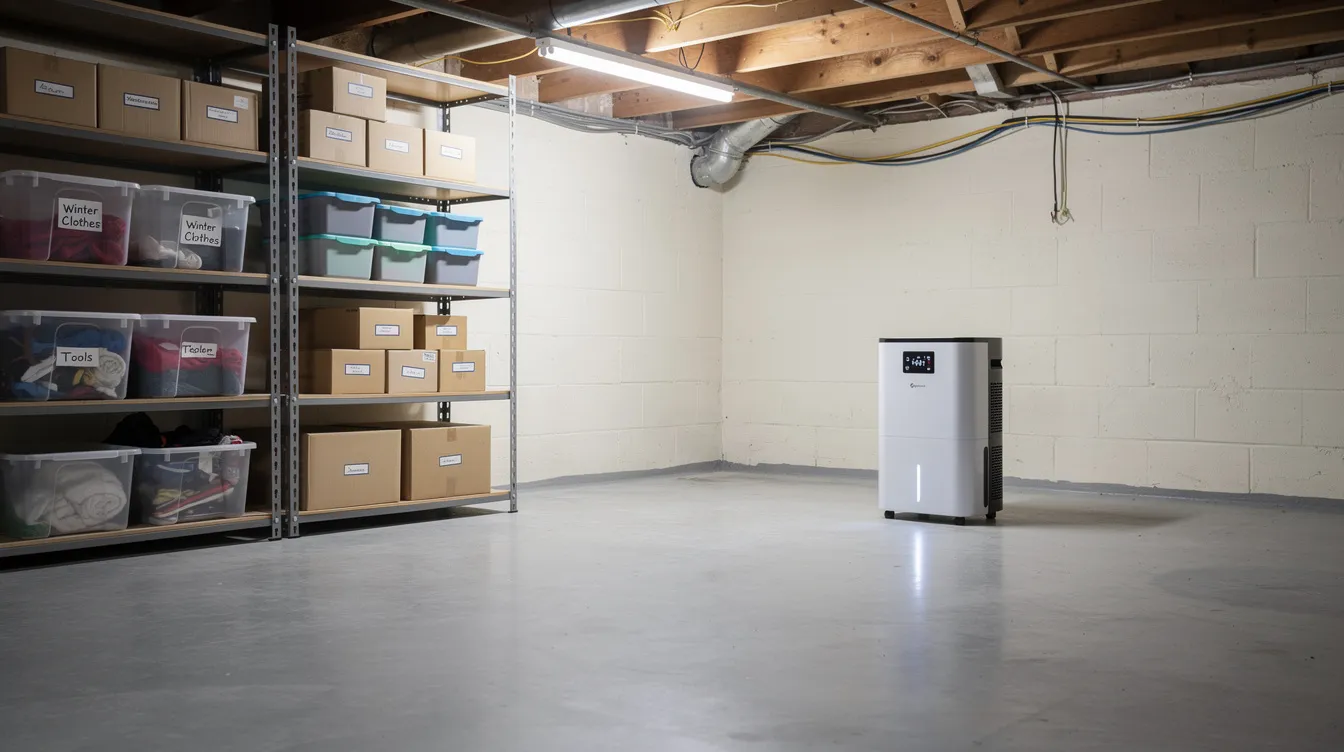
Humidity management: To prevent white mold from returning, keep basement humidity below 50% by using a dehumidifier and improving ventilation. Target 30-50% relative humidity using a dehumidifier sized appropriately—50 pints per day handles approximately 1,500 square feet. Run continuously during wet seasons (typically March through June in Utah). Department of Energy studies show proper dehumidification cuts regrowth rates by 80%.
Exterior drainage fixes:
-
Extend downspouts 6-10 feet from the foundation
-
Ensure soil slopes away at 5% grade (2 inches drop per 10 feet)
-
Check sprinkler systems for overspray hitting foundation walls—when you learn how to turn on irrigation system each spring, inspect heads for proper aim
-
Clear gutters before snowmelt season
Interior measures:
-
Seal foundation cracks with hydraulic cement (for cracks under 1/4 inch)
-
Insulate cold water pipes with foam sleeves to prevent 5-10 gallons of condensation annually
-
Install vapor barriers (12-mil polyethylene) in crawl spaces with sealed seams
-
Consider foam board insulation on basement walls (R-5 reduces condensation by 90%)
Proper air circulation strategies:
-
Leave 2-4 inches between stored items and concrete walls
-
Use pallets or shelving to keep boxes off floors
-
Ensure proper ventilation through windows or mechanical systems
-
Run an air conditioner during humid months to reduce moist air levels
Proper drainage and moisture levels management cuts long-term mold risk by 60-70% according to ASHRAE guidelines. For foundation and drainage improvements that address chronic damp environments and damp areas, Superior Foundation Repair services can handle crack injections, interior drain systems, and exterior grading corrections.
When to Call a Professional for White Mold in Basement
Some basement mold situations exceed safe DIY scope due to size, location, or underlying structural issues. Knowing when to call a mold professional saves time, protects health, and prevents costly mistakes.
Clear trigger points for professional help:
-
Visible affected area larger than 10 square feet
-
Mold on structural framing, joists, or subfloor
-
Repeated mold growth despite previous cleaning
-
Contamination in HVAC systems spreading spores
-
Post-flood situations or long-term water intrusion
-
Foundation movement or significant cracking
Homeowners in St George with finished basements should seek professional help if mold appears behind baseboards, under laminate floors, or along interior partition walls. These hidden locations often indicate moisture problems in building walls that surface cleaning won’t resolve.
What professional mold testing and remediation typically includes:
-
Visual inspection and thermal imaging to detect moisture variance
-
Air sampling and swab collection (action level typically >1,000 spores per cubic meter)
-
Containment with negative air pressure
-
HEPA scrubbing (500 CFM, 4 air changes per hour)
-
Controlled demolition of porous materials when needed
-
Post-clearance testing confirming spore levels below baseline
-
Documentation for insurance claims (40% of homeowner claims involve mold)
Utah cost ranges: | Service | Typical Cost | |———|————–| | Professional mold inspection | $300-$800 | | Localized remediation (<100 sq ft) | $800-$3,000 | | Structural remediation | $5,000+ | | Foundation crack repair | $200-$800 per linear foot |
When white mold in basement situations involve seepage through building materials or concrete wall cracking, addressing both mold and moisture source simultaneously delivers lasting results. Superior Foundation Repair provides Utah homeowners with integrated evaluation when mold problems connect to foundation issues.
FAQ: Common Questions About White Mold in Basements
Utah homeowners regularly ask these practical questions about identifying, removing, and preventing white mold. Here are detailed answers based on industry standards and local conditions.
Can I paint over white mold in my basement?
Painting over mold is never a solution—it traps moisture behind the paint film, doesn’t kill or remove spores, and typically leads to peeling paint and hidden mold growth within 3-6 months. Many building materials continue harboring active colonies beneath the paint surface.
The proper sequence requires identifying and fixing the moisture source first, then removing mold and contaminated cleaning materials, drying the area thoroughly (below 16% moisture content using a pin meter), and only then applying mold-resistant primer and paint to clean, dry surfaces.
If you notice visible mold bleeding through fresh paint, it’s a red flag that professional mold inspection is needed. The underlying moisture problem wasn’t resolved, and the mold colony continues growing beneath the surface.
Is white mold in basement dangerous if I don’t spend much time down there?
Even rarely-used basements connect to your entire home through the “stack effect”—heated air naturally rises, carrying mold spores and musty smell odors upward into living spaces. Studies show 20-50% of basement air circulates into upper floors daily through this natural convection.
Occasional basement use for laundry access, storage retrieval, or utility maintenance exposes occupants to spores that can aggravate allergies and asthma over time. Health effects accumulate with repeated exposure, even at low concentrations. A 10+ year exposure pattern correlates with 15% chronic sinusitis risk.
Any persistent mold growth—even in damp materials stored in rarely-visited rooms—should be taken seriously. The combination of cleanup and mold prevention steps protects everyone in the home, not just those entering the basement.
How much does it cost to fix white mold and moisture issues in a basement?
Cost ranges vary based on scope, but here’s what Utah homeowners typically encounter:
|
Approach |
Cost Range |
|---|---|
|
Small DIY cleanup (materials only) |
$30-$150 |
|
Basic dehumidifier (50-pint capacity) |
$200-$400 |
|
Professional assessment + localized remediation |
$800-$3,000 |
|
Foundation crack injection |
$500-$2,000 |
|
Interior drain system installation |
$3,000-$10,000 |
Foundation and drainage corrections—such as crack injections, interior drains, or exterior grading—range from a few hundred to several thousand dollars but protect the home long-term with proper moisture control. The ROI on proper remediation reaches 5x through combined health and property value preservation.
For site-specific estimates when mold connects to ongoing water intrusion or structural concerns, contacting a local company like Superior Foundation Repair provides accurate Utah-market pricing.
Will a dehumidifier alone get rid of white mold in my basement?
Dehumidifiers help stop new mold growth by lowering humidity but do not remove existing mold colonies, stains, or spores already present. Running a dehumidifier without physically addressing the mold means colonies remain—ready to reactivate if humidity rises or grow back at 50% rates without actual removal.
Proper remediation requires physical removal or cleaning of mold from the affected area, followed by consistent humidity control and moisture management as ongoing prevention. Address mold promptly with proper cleaning methods before relying on humidity control alone.
Target humidity levels of 40-50% for effective prevention. Homeowners all over Utah often need larger-capacity units (50+ pints daily) due to seasonal moisture fluctuations and cooler basement temperatures that promote condensation on cool surfaces.
Conclusion: Protecting Your Home from White Mold in the Basement
Recognizing the difference between white mold and efflorescence—a powdery texture that dissolves versus fuzzy growth that persists—is your first line of defense. Understanding that other mold types and mold species pose similar health risks regardless of color helps homeowners take appropriate action rather than dismissing “harmless-looking” white patches.
Basements, crawl spaces, and concrete walls remain common problem areas throughout Utah, but they don’t have to develop white mold repeatedly. With proper drainage directing water away from foundations, adequate proper ventilation preventing poor air circulation, and consistent humidity monitoring, recurring mold growth can be stopped. Remember that toxic mold concerns apply across the color spectrum—get rid of white mold with the same urgency you’d address any fungal contamination.
For Utah homeowners who suspect persistent white mold in basement environments, or who notice signs of water intrusion, foundation cracking, or chronic dampness, consulting trusted local experts delivers lasting solutions. Superior Foundation Repair offers evaluation services that address both the moisture source and resulting mold concerns—because fixing one without the other means the problem returns.